For a moment the fear that your enemy has divined your intent seizes you. It is like a phantom hand reaching out fromdeep darkness, a mist gathered into human form, slipping its fingers between your ribs, grasping your heart with a cold-quickening, wringing you out like some dirty sponge, draining you, squeeze by squeeze, of each drop of essential life.
Which ugh. But how can your enemy know your intent when you yourself have no idea who you are? Are you finally ready? Now is the time for you to know, dear reader: you are now and all along have been the greatgrandson of Ts’ui Pen, the once-Governor of Yunnan who gave up all temporal powers to write a novel with more characters than there are in the Hung Lou Meng, as in a whole hell of a bunch, and to then create a maze in which all men would lose themselves. #goals Your greatgrandfather spent thirteen years on these task before he was assassinated by a stranger, and when his time was up, the incomplete novel had less sense to it than his labyrinth.
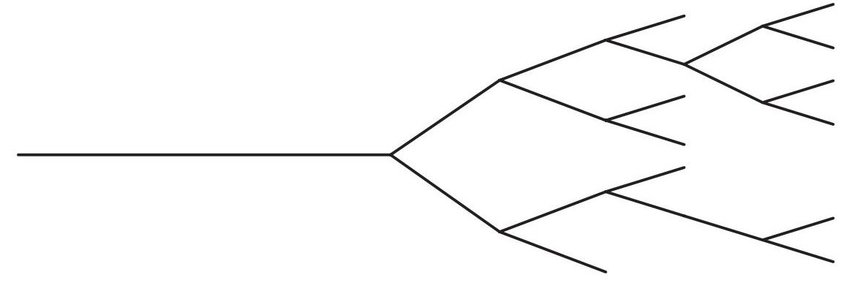
Now, here, as you find yourself walking with some hurry in a tree-canopied countryside, you meditate on the lost and perhaps mythical labyrinth. You imagine it untouched and perfect on the secret summit of some mountain; you imagine it drowned under rice paddies or beneath the sea; you imagine it infinite, made not only of eight-sided pavilions and of twisting paths but also of rivers, provinces and kingdoms…you think of a maze of mazes, of a sinuous, ever-growing maze which would take in both past and future and would somehow definitely involve the stars. A maze that reflects the path and paths you’ve been on these late days, a constellation you might see in the night’s sky, growing ever more complex as the evening waxes, wanes; as the lights flicker on and off and on; as more paths emerge; more plots; more coincidences; more familiar faces; until finally you see there in the invisible lines drawn between the far-off distant stars, of course the creators of the stuff of you, your own self, your own likeness, your own eyes. Peering back.
Lost in these imaginary illusions it’s easy to forget your current destiny—that while once you were seeking adventure, now you have become the hunted. Or are all who adventure hunted–fleeing themselves even as they stalk their selves? Line after line, word after word, page, page, there it is, a seeking after of you, for you, a search for your ending, your final resting place. All plots move deathward, cough, cough. For an undetermined period of time you have felt yourself cut off from the world, an abstract spectator. Remember now: you are material. The world: material. And these trees! The hazy murmuring countryside, the moon, the decline of the evening—all of it stirs within you. Going down this gently sloping road you want to but you cannot allow yourself to feel fatigue. The evening is at once intimate and infinite. The road keeps descending and branching off, through meadows misty in the twilight. (Like, um.) A high-pitched and almost syllabic music moves with the breeze, blurred by the leaves and by distance. You think that a man might be an enemy of other men, of the differing moments of other men, but never an enemy of a country: not of fireflies, words, gardens, streams, or the west wind.
Meditating thus you arrive at a high, rusty iron gate (even in the dimness, you have an eye for rust and other aspects of decay). Through the railings you can see an avenue bordered with poplar trees and also a kind of summer house or pavilion. Two things dawn on you at once, the first trivial and the second incredible: the music comes from the pavilion, and the music is Chinese. This is why you have accepted it fully, without paying it any attention. (You have some Chinese in you, is the thing. See above. Most everyone does, one way or another. Go ahead and check the provenance of all your household goods if you disbelieve … then proceed to your genes … then the viruses dormant in your genes … then the air you breathe … the water you drink … the music you sing … the fireworks you admire … the guns you shoot … the noodles you slurp.) Have we not told you this? Sorry, need to know basis. You didn’t, now you do.
The stuttering sparks of the music keeps on as, from the end of the avenue, from the main house, a lantern approaches; a lantern which alternately, from moment to moment, is crisscrossed or put out by the trunks of the trees; a paper lantern shaped like a drum and colored like the moon. A tall man, roughly your own height, carries it. You cannot see his face for the light halfblinds you.
He opens the gate and speaks slowly in your own language.
“No doubt,” he says, “you want to see the garden?”
Taken aback, you repeat his last two words.
He smiles gently. “Yes. The garden of forking paths.”
Something stirs in your memory as he gestures for you to follow, as you two walk down a damp path as zigzagged as your childhood. Everything anymore is a shadow of the past, and so much smaller than you remember. You enter the house into a library, and you recognize some large volumes bound in yellow silk-manuscripts, the fabled Lost Encyclopedia edited by the Third Emperor of the Luminous Dynasty–supposedly, these were never to have been printed. And a set of skeleton dice, these for the Game of Bones, a game until your recent underworld detour with the pretty hilariously ribald plumbers you’d only ever believed was myth, sits in an orderly row of five, each die revealing a grimly different face. A phonograph record spins near a bronze phoenix, a low voice whispers over twinkling piano keys about storms, a wig rests atop the phoenix’s head, long dark curling hair like that of a pirate or a gypsy. There is also a rose-glazed jar and yet another, older by many centuries, of that blue color copied from the Persians. A leather satchel slung over a worn wooden chair. You lean toward it … you can almost make out a familiar outline within.
All the while the man is watching you with something like a sad smile. He stands in an arched doorway set with an ornate carving, a deep mahogany that seems to have faces carved into the wood like some ancient frieze from the middle ages: awful faces, pained faces, faces swirling in different settings: agony upon high seas, death in train stations, murder in the streets of an elusive anonymous city. The faces seem to whorl, so carefully done, these carvings, with their little lines of illusory motion. And the man standing there sadly amongst them, whittling a piece of wood with a small blade. His face, too, is deeply lined, his eyes gray, a trim of gray beard. There is about him something of the priest, you think; but when you look again, you see more the salty expression of a sailor, those violent humours beneath.
“Shall we have it now?” he says. “Our conversation?” He clasps his hands behind his back. “Of course I mean the conversation about fate. About all the things that brought you here. The choices you have made that have led you, finally, here. Every step forward is a turn sideways. Every path is a labyrinth. And one thing waits at the end for every man,” he says, and even as he speaks, you listen only half-attentively; more, you attend to his person, his form; you watch his mouth move the words from him, the muscles of his throat shift; the pulse of the vein there in it; you move closer to him, there in the doorway, you see his features, sorrowful and so, so tired.
As he continues speaking he begins whittling again, studying the work of his hands. He is a slight man. Snappable. “It is like the famous riddle,” he continues. “What thing awaits us all, but is different for everyone?” And as he speaks he keeps working at the piece of wood, little whorls falling to the floor, and you wonder if this is all he has done, and for how long has he waited here, whittling away amongst all these dead treasures, waiting here alone, waiting for you. He doesn’t even react as you twist his neck, doesn’t brandish the tiny blade; he seems to go willingly, and as the light in his eyes goes out, he whispers, “Thank you,” and drops the blade, drops the carving, and you gently lay his body upon the floor and, kind person that you are, lower his eyelids. Finally he’ll be able to stop seeing. To stop reading.
Then, evercurious fool that you are, you reach toward the carving.

 home
home 