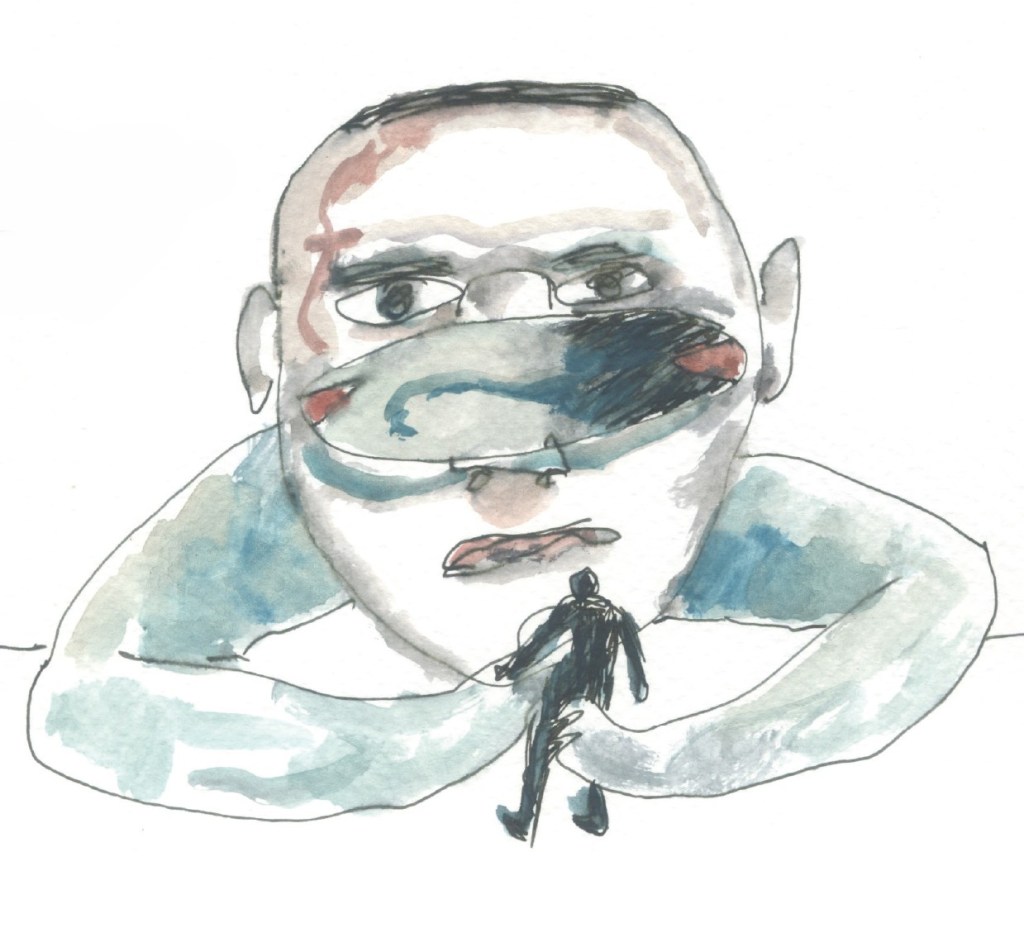
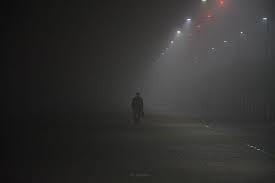
Much to be said for the rhythmmy rhythmic of walking.
How it clears the mind. How the body falls
into pace the body empties and as in the riddle of the flowing cups so in a parallel course the mind just there right there over beside the body there here not here opens itself up as well. Oh I shall sever the top of your skull and pour the information in. Simpler operation that way spesh here on a starless night. Much as in a strange room in which you must empty yourself for sleep and before you are emptied what are you. And when you are emptied you are not. And when you are filled with sleep you never were. Think: I dont know what I am. I dont know if I am. You don’t. You know so very little now. You do. Walkwalking here and now in the herenow moonlit dark are you suresure you belong or ought maybe you go back from whence you
It is here, in this self-emptied rhythm, step by step, that more pieces come to you like so many crumbs scattered upon the moonlit road: you had two siblings: a brother and a younger sister. The former left you both when he came as it is said of age, after years of torments laid upon you both. Vicious brother, all those plots he hatched, all the plot-holes you fell stupidly into. The painful poundings, the pinchings, the jeering jabs. The holes he cut into walls to spy on you, to spy on her, too, and what power had either of you to stop him, what powers do readers have to stop any story’s writer? Stories will be stories writers will be writers boys will be boys—this the weak and unhelpful parental refrain.
Finally, you fled, too. Leave the pain behind. Sorry, sis.
But now: could it be—that she is taken? By whom? By him?
You walk with a certain dread along this road, lost in a swirl of thoughts, and soon you hear, ahead, past a copse of trees, voices. Soft murmurings. Perhaps a garden party.
It’s but dim lighting. Someone has taken a long holiday. Night has eliminated the landscape, and as you follow the narrow winding road, a series of short posts, ghostly white with reflectors, borrow the moon to indicate this or that curve. As sad obstacles in the dark do tend to gather meager light about them. You can make out a dark valley on one side and wooded slopes on the other, and before you, like derelict snowflakes, moths drift out of the blackness into the moon’s probing aura. At the twelfth moment and, just beyond it, a white-washed rock looms on the right; a few car lengths further, on the same side, you turn off the highway, up gravelly Grimm Road. For several minutes all is dank, dark dense forest.
The manor is an enormous wooden house with a turret, arising in a circular clearing. Its windows glow yellow and red; its drive is cluttered with half a dozen cars. You pause in a shelter of the trees beside a small utility shed at the garden’s edge, hiding a moment in the nighttime shade. From your vantage you see that despite the late hour there are not only adult revelers but children also at play, rushing across a grassy lawn upon which an immense veranda intrudes, scampering and laughing themselves into fits of more laughter, chasing something that in the darkness you’re unable to see.
The mansion glows; warm yellow light emanates; the curtains are pulled; you hear music and more voices, more laughter, the tinkling of silverware upon plates, glasses clinked; you see through the curtains the faint outlines of men and women smiling and nodding and cajoling and fraternizing and sororitizing, no details per se just the fuzzy logic of half-familiar forms, shadows upon a wall, perhaps only the shape of happiness behind curtains, and the sounds, too, murmurations of fond elegy to a life you’ve certainly never found, not in the many years since you left.
In a great room someone pulls an actual curtain. The room is quite great, windows two stories high, and you see within it faces recently familiar and otherwise, like a troupe of actors after a long theatrical run, the last curtain has fallen (opened), they can finally relax. Their faces are smeared with wiped-away makeup, wigs gone, hair tamped down, they’re wearing more or less underclothes, a robe here, a flash of thigh there, laughily backslapping, the show has ceased, the game is done, the music’s over. You aren’t even surprised to recognize them from your many recent adventures. Shipmates. Captain-bus drivers. Office men, gypsies, fortune tellers, train passengers. Teachers. One in particular.
But you don’t see him—and you don’t see her.
A door opens.
A young woman steps onto the veranda, walks to the edge.
She is weeping.
You know in your bones you must save her. But a voice calls to her from within, and she wipes her face, turns, goes back. Now is not the time. Go to the shed’s door. Wait within.